The pattern
An enthusiastic team proposes an AI assistant for learners, a skills inference project or an analytics layer. Weeks in, the questions begin. Where are the completion records? Can we use them? Who signs off? Is this data even accurate? The project waits. Eventually it quietly stops.
The five questions
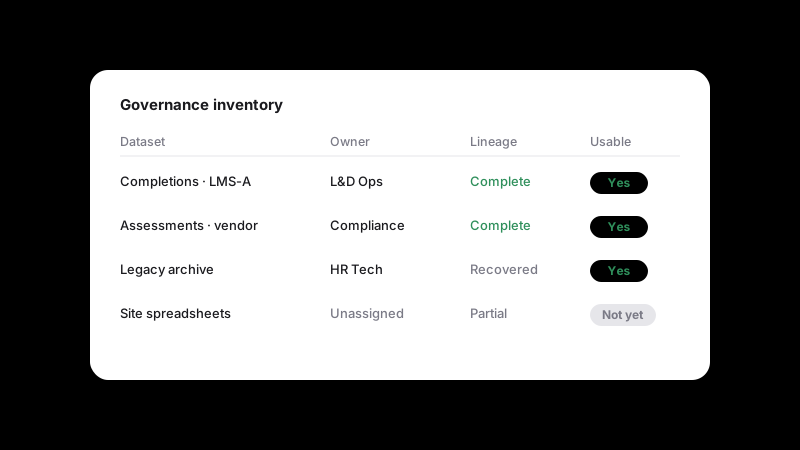
Existence: what learning datasets exist and where. Ownership: who is responsible for each. Permission: who may use it and under what conditions, including privacy classification and consent status. Lineage: where it came from and what was done to it. Quality: how complete and accurate it is, and where the gaps are.
These are governance questions, and they have governance answers. They do not need a new model; they need an inventory.
The inventory as data
A document listing datasets is out of date the day it is written. The inventory needs to be maintained as data, updated as systems change, with owners, permissions and lineage attached to the datasets themselves. That is what LearningUnify's governance layer provides, and it is the reason the platform improves AI readiness without doing anything AI-specific.
Fix the foundation first
Reconcile identities. Normalize structures. Attach lineage. Surface quality issues. Every downstream project benefits, from a BI dashboard to an agent workflow. Governed, well-described records are what make an AI workflow trustworthy; the inventory is the context.
What this is not
LearningUnify does not train models on customer data. The platform's role is to provide trustworthy, governed context. What organizations build on top of it is their choice.
More from the blog
Institutional memory should not depend on a vendor contract
Organizations remember through their records. When learning records live only inside platforms that get replaced every few years, the organization forgets.
Learn more →Neutral by design: why we chose not to build an LMS
The easiest product to sell is another platform. We built a layer instead, and the reason is structural.
Learn more →xAPI, exports and APIs: why lineage matters more than the connection method
Teams argue about which integration method is best. The more important question is whether you can trace every number back to where it came from.
Learn more →Ready to see your learning data in one place?
Tell us which systems you run and we will show how the platform connects, normalizes and preserves their records.