Start with an inventory, not a judgment
List every content source: LMS libraries, vendor subscriptions, internal repositories, departmental drives. For each item capture title, owner, version, licence terms, renewal date and cost. The inventory alone usually surprises people; the number of libraries is rarely known.
Join usage to cost
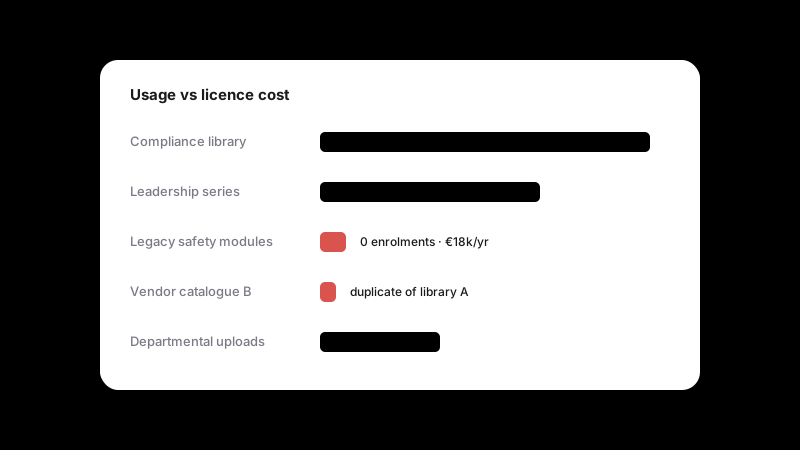
Pull enrollments and completions per item over twenty-four months from every platform. Content with a licence cost and no usage is the first list. Content with usage but no owner is the second.
Find overlap
Similar titles across vendors, superseded versions still published, the same course uploaded to three platforms with slightly different names. This is only visible once metadata is normalized across sources, which is why it rarely gets done by hand.
Decide, document, repeat
For each item: keep, consolidate, retire or renegotiate. Record the reason. Then keep the inventory refreshed continuously so the next budget cycle starts from current data rather than another one-off project. LearningUnify's content portfolio audit produces exactly this ranked list from normalized metadata and usage.
More from the blog
Institutional memory should not depend on a vendor contract
Organizations remember through their records. When learning records live only inside platforms that get replaced every few years, the organization forgets.
Learn more →Neutral by design: why we chose not to build an LMS
The easiest product to sell is another platform. We built a layer instead, and the reason is structural.
Learn more →xAPI, exports and APIs: why lineage matters more than the connection method
Teams argue about which integration method is best. The more important question is whether you can trace every number back to where it came from.
Learn more →Ready to see your learning data in one place?
Tell us which systems you run and we will show how the platform connects, normalizes and preserves their records.